
Water, Loss, and the Possibility of Forgiveness
I Know This Much Is TrueThe novel returns to rivers, falls, ponds, and rain as images of grief, drowning, memory, and the possibility of moving forward without erasing the past.
increasing Bearing strength in each event
 decreasing
Bearing strength in each eventdecreasingA Childhood River of Fear
A Childhood River of Fear
Water as escape and danger
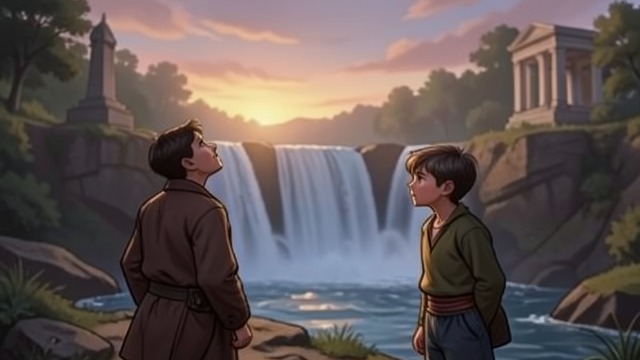
The twins’ childhood landscapes include ponds, rivers, and the Falls, places that invite adventure but also carry risk. In a dream about the Statue of Liberty, Dominick finds that an apparent cave of confinement opens into the body of the monument; even childhood escape fantasies leave him unsure whether freedom is real.
The Falls and its histories
The Falls become a place where local memory gathers around danger, including Penny Ann Drinkwater’s murder. The beauty of the rushing water coexists with a history of violence and fear, making the landscape both a refuge and a threat.
A place shared unequally
Thomas and Dominick experience these locations differently. Thomas watches and worries, while Dominick takes risks and later remembers the cost of surviving them. The river becomes an early image of how the brothers can inhabit the same place yet carry different fears.
The Pond and the Unwashed Conscience

The Pond and the Unwashed Conscience
A betrayal carried home
After Dominick and Leo mislead the police about Ralph, Dominick walks alone through the night, disturbed by the lies that protected them. The shame is compounded by his earlier treatment of Dessa and his failure to protect Thomas from Dell’s humiliation.
Water as attempted cleansing
Dominick swims in Rosemark’s Pond, hoping to wash away the smell of marijuana, betrayal, and coercion. The cold water offers a temporary physical sensation of release, but he emerges feeling no cleaner than before.
Recognition without absolution
At the water’s edge, Dominick admits to himself that he has acted like a bully. The realization does not undo his choices, but it creates a first opening toward responsibility. The pond’s failed cleansing makes clear that guilt must be faced, not merely submerged.
The River as a Family History

The River as a Family History
Past flowing into present
Dr. Patel describes life as a river that flows from the past through the present toward the future. Her image challenges Dominick’s wish to treat childhood and family history as sealed-off episodes with no bearing on what he must face now.
A history of loss
Dominick’s memories connect the river to Thomas, to the Wequonnoc cemetery, to his dead daughter, and to his grandfather’s garden. The landscape holds multiple generations of grief, making personal loss part of a larger family current rather than an isolated event.
A direction that cannot be commanded
The river also exposes the limits of control. Dominick cannot reverse its current or undo the past, just as he cannot command Thomas’s recovery. He can nevertheless choose whether to remain turned away from the history flowing beside him.
The Falls and the Burden of Rescue
The Falls and the Burden of Rescue
A landscape of recurrence
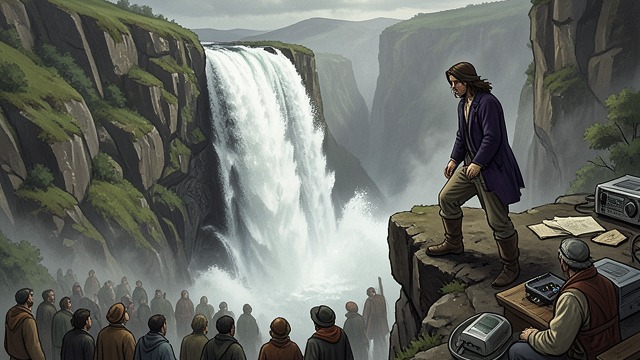
The Falls connect childhood memories, community history, and Dominick’s present crisis. He returns to the place while overwhelmed by fear for Thomas and guilt about his own limits, bringing the past into direct contact with the urgent question of whether he can keep his brother safe.
The fantasy of control
Dominick imagines himself as a rescuer who can stop every fall and carry every burden. Yet the landscape offers no promise that love can control another person’s illness or fate. The Falls remain powerful precisely because they exceed his ability to manage them.
A changing relationship to grief
Over time, Dominick’s memories of water shift from cleansing and escape toward recognition and mourning. He begins to understand that moving forward does not require erasing the people or events that shaped him. It requires learning to carry grief without making rescue his only form of love.
The Flow Beyond the Shore
The Flow Beyond the Shore
A life after the falls
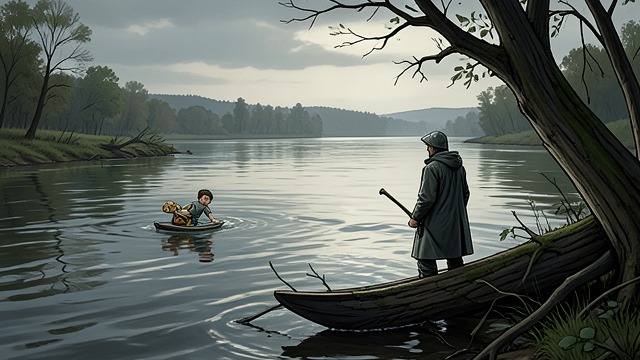
After Thomas’s release and death, Dominick faces grief without the emergency tasks that had organized his life. His injuries, his father’s decline, and Joy’s departure force him to notice that he cannot keep every relationship from ending or every loved one from suffering.
Acceptance without forgetting
Dr. Patel’s river image helps Dominick consider that the past is not a sealed room but part of a continuing life. Forgiveness does not mean excusing violence or pretending that loss is small; it means loosening the grip of grievance enough to live in the present.
A future still in motion
Dominick eventually reunites with Dessa, adopts Tyffanie, and builds a life that includes both sorrow and renewed connection. The ending does not promise a perfectly healed family. It suggests that people can move forward when they stop trying to control the entire river and accept their place within its current.
In the twins’ childhood, including the 1958 bus encounter and later visits to the Falls
After the police interrogation in the summer of 1969
During Dominick’s visits to Hatch and his later therapy with Dr. Patel
In the months after Thomas’s Hatch commitment, before the hearing
From Dominick’s return to therapy in 1991 through his later reconciliation with Dessa
